
You're already sending newsletters...
You're already getting clicks...
Your problem is what happens (or doesn't) after the click.
You're already sending newsletters...
You're already getting clicks...
The problem is what happens (or doesn't) after the click.
STACK builds the system that responds to those clicks automatically,
so every newsletter you write keeps selling long after it sends.
$397 one-time · or two payments of $218
You're already sending newsletters...
You're already getting clicks...
Your problem is what happens (or doesn't) after the click.
You're already sending newsletters...
You're already getting clicks...
The problem is what happens (or doesn't) after the click.
STACK builds the system that responds to those clicks automatically,
so every newsletter you write keeps selling long after it sends.
Meet Automations:
Your Email Marketing Superpower.
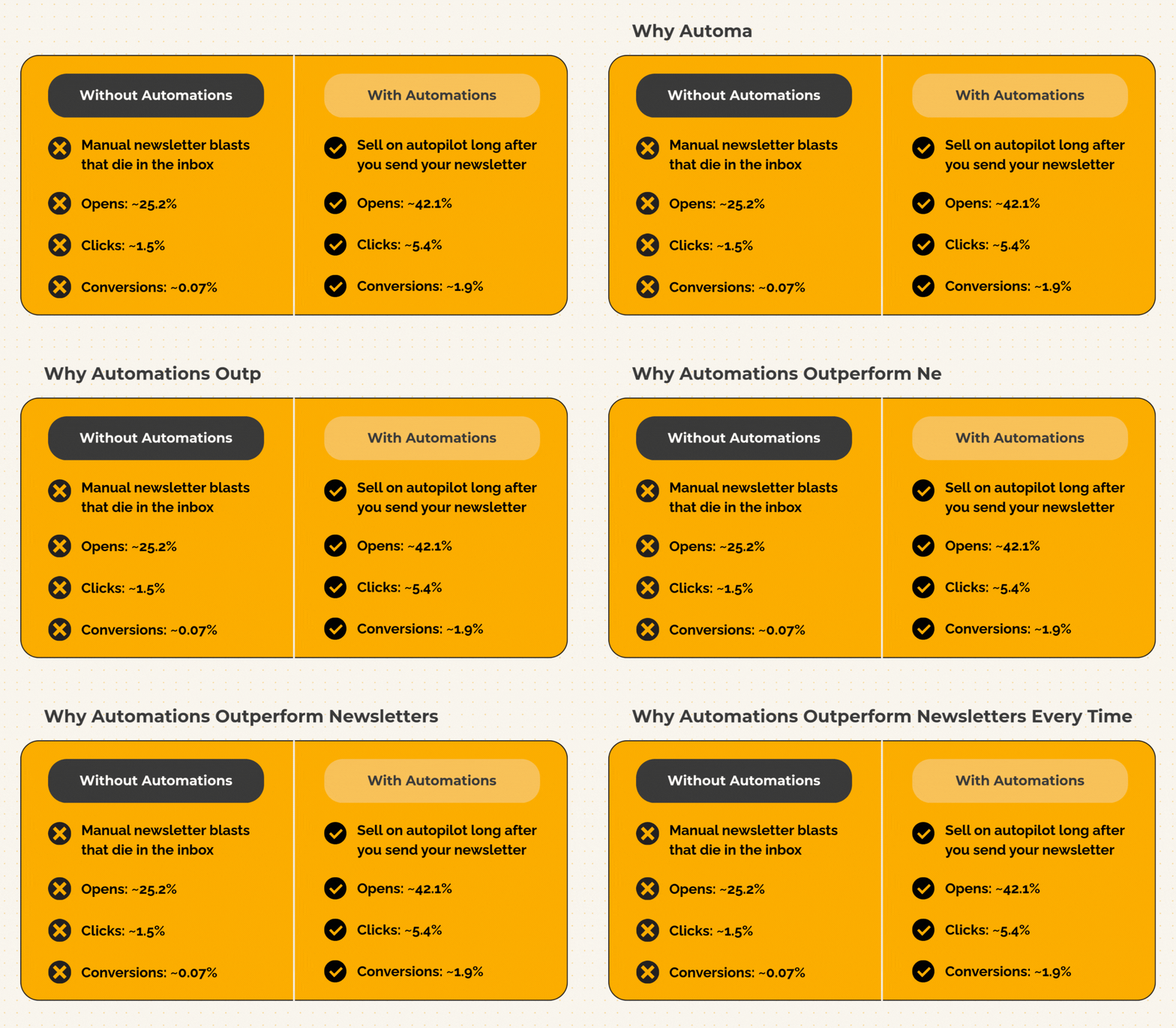
Without automations, your newsletter is a dead end.
Without automations, your newsletter is a dead end.
With them, it becomes the spark that turns attention into sales that generate long after you hit send.
With them, it becomes the spark that turns attention into sales that generate long after you hit send.
Your newsletter isn't the problem.
You're showing up. You're writing. You're hitting send. And people are clicking.
But a click isn't a sale. It's a signal.
It's a subscriber telling you exactly what they want more of. And without a system to respond to it, that signal disappears.
They go back into the pool. You send your next newsletter. The moment passes.
That's not a content problem.
It's not a consistency problem.
It's not even an audience problem.
It's a what-happens-after-the-click problem.
Your newsletter isn't the problem.
You're showing up. You're writing. You're hitting send. And people are clicking.
But a click isn't a sale. It's a signal.
It's a subscriber telling you exactly what they want more of. And without a system to respond to it, that signal disappears.
They go back into the pool. You send your next newsletter. The moment passes.
That's not a content problem.
It's not a consistency problem.
It's not even an audience problem.
It's a what-happens-after-the-click problem.
Here's what changes when the system is in place:
The newsletter stays exactly what it is.
Your voice, your value, your relationship with your audience. What changes is what happens after someone clicks.
They click a link about your offer → they get a short follow-up about exactly that offer.
Not your next newsletter.
Not a blast to your whole list.
Just them, and the thing they just told you they cared about.
That's the system. It reads the click. It responds to it. It keeps the conversation moving while you're doing everything else.
That's what STACK builds.

INTRODUCING
The email marketing course that builds the system underneath your newsletters, so every click your subscribers make triggers the right follow-up automatically, and your emails keep selling long after you hit send.
The email marketing course that builds the system underneath your newsletters, so every click your subscribers make triggers the right follow-up automatically, and your emails keep selling long after you hit send.
INTRODUCING
The email marketing course that builds the system underneath your newsletters, so every click your subscribers make triggers the right follow-up automatically, and your emails keep selling long after you hit send.
The email marketing course that builds the system underneath your newsletters, so every click your subscribers make triggers the right follow-up automatically, and your emails keep selling long after you hit send.

Everyone says...
“send a newsletter to stay top of mind.”...
But staying top of mind isn't the same as making a sale.
Your subscribers are already clicking. They're already telling you what they're interested in. The problem isn't that they're not paying attention. The problem is that nothing is responding to that attention when it shows up.
No follow-up. No next step.
Just your next newsletter, sent to everyone, regardless of what they just did.
That's the gap. And it's not your fault. Nobody told you it was there.
Let's close it.
Everyone says...
“send a newsletter to stay top of mind.”...
But staying top of mind isn't the same as making a sale.
Your subscribers are already clicking. They're already telling you what they're interested in.
The problem isn't that they're not paying attention. The problem is that nothing is responding to that attention when it shows up.
No follow-up. No next step. Just your next newsletter, sent to everyone, regardless of what they just did.
That's the gap. And it's not your fault. Nobody told you it was there.
Let's close it.
WHAT A SYSTEM DOES THAT A NEWSLETTER ALONE NEVER CAN:
01 — Catches the signal
Every click is a subscriber showing you what they want more of. The system catches that signal and responds to it: automatically, specifically, while the interest is still there.
02 — Keeps the conversation moving
Most subscribers aren't ready to buy the first time they click. They need more. More context, more proof, more of whatever they just showed interest in. Pre-built follow-ups deliver exactly that, automatically, on their timeline. Not a blast to everyone. Just them, and the thing they clicked.
03 — Closes the loop
The right follow-up at the right moment. Proof, context, answers to the unasked question, going deeper... is what turns a click into a sale. Without it, interest fades. With it, it compounds.
Meet your build tools.
These interactive AI tools are designed to be your Email System Sidekicks. They will help you seamlessly execute everything you learn in STACK and build the system your newsletters deserve.
Tag Library Builder
This is a your home base for the entire course. Build your naming convention, create every tag by category, and export a clean list to paste into your ESP. Come back every time you add a new automation. Font
Arrival Flow Planner
Tell it about your lead magnet and what you want subscribers to do next. It builds your complete delivery sequence and arrival flow — Seeker or Grabber — email by email, before you write a word.
Click Trigger Builder
Map the links in your newsletters, identify what each click signals, and build the follow-up sequence that responds to it. Outputs a full plan with writing prompts for every email.
Nurture Sequence Builder
Tell it who the segment is, what's blocking them, and what you want them to do. It maps the full sequence with email-by-email blueprints and writing prompts based on where they are in their awareness journey.
Re-engagement + Sunset Builder
Define your inactive threshold, your approach, and what happens at the end. It maps both sequences with automation logic and writing prompts so nothing gets skipped.
Post-Purchase Sequence Builder
Tell it what was purchased and who the buyer is. It builds the right sequence for your offer type — course, service, or product — with writing prompts that treat buyers like buyers, not prospects.
Map Your Email Ecosystem
See every layer of your system at once — what's built, what's missing, and exactly what to focus on next. Use it at the start of Module 6 and come back every time you complete a new automation.
Your subscribers aren't ignoring you.
They're just not ready yet.
Nobody says yes the first time they see something they're interested in. They need to see it again, in a different light, at a moment that fits where they actually are. That's not a them problem. That's just how buying decisions work.
The system handles that automatically.
When someone clicks a topic link →
they get a short follow-up about exactly that topic. Two or three emails that go deeper on the thing they just showed interest in.
When someone visits your offer page but doesn't buy →
they get proof. A case study, answers to the unasked questions, a clear next step.
When someone starts checkout and bounces →
they get a gentle reminder that addresses the most common reason people hesitate.
When someone goes quiet →
the system checks in before they disappear entirely.
When someone buys →
they get onboarded properly so the relationship doesn't end at the transaction.
The newsletter starts the conversation. The system continues it.
$397 one-time · or two payments of $218
WHAT A SYSTEM DOES THAT A NEWSLETTER ALONE NEVER CAN:
01 — Catches the signal
Every click is a subscriber showing you what they want more of. The system catches that signal and responds to it: automatically, specifically, while the interest is still there.
02 — Keeps the conversation moving
Most subscribers aren't ready to buy the first time they click. They need more. More context, more proof, more of whatever they just showed interest in. Pre-built follow-ups deliver exactly that, automatically, on their timeline. Not a blast to everyone. Just them, and the thing they clicked.
03 — Closes the loop
The right follow-up at the right moment. Proof, context, answers to the unasked question, going deeper... is what turns a click into a sale. Without it, interest fades. With it, it compounds.
Your subscribers aren't ignoring you.
They're just not ready yet.
Nobody says yes the first time they see something they're interested in. They need to see it again, in a different light, at a moment that fits where they actually are. That's not a them problem. That's just how buying decisions work.
The system handles that automatically.
When someone clicks a topic link →.
they get a short follow-up about exactly that topic. Two or three emails that go deeper on the thing they just showed interest in.
When someone visits your offer page but doesn't buy →
they get proof. A case study, answers to the unasked questions, a clear next step.
When someone starts checkout and bounces →
they get a gentle reminder that addresses the most common reason people hesitate.
When someone goes quiet →
the system checks in before they disappear entirely.
When someone buys →
they get onboarded properly so the relationship doesn't end at the transaction.
The newsletter starts the conversation. The system continues it.
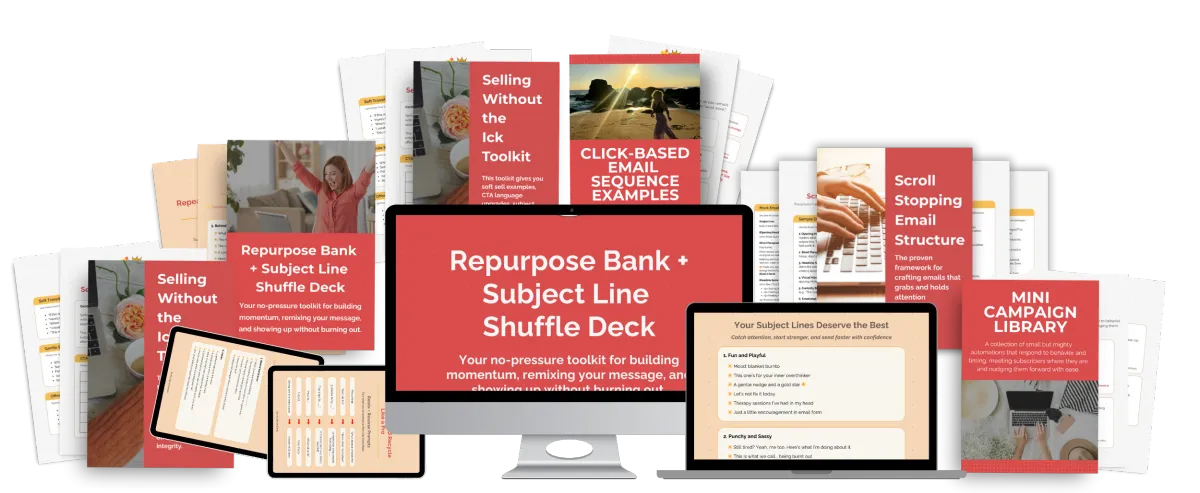
Everything you need to build the system and keep it running:
8 Modules | 33 Lessons: A step-by-step build from "I send newsletters" to a full behavior-based email system. Each lesson ends with one clear action to move you forward.
Plug-and-Play Sequence Templates: The core flows, micro-campaigns, and utility emails, all written, structured, and ready to customize.
150+ Newsletter Ideas: A full bank of topic ideas so every send has a purpose and you never stare at a cursor wondering what to write this week.
50+ Subject Line Ideas: Tested structures that get your emails opened. Stop second-guessing the one line that determines whether any of this gets read and start sending with confidence.
Interactive Build Tools: Seven purpose-built tools that walk you through and build every automation in the course.
Tech Setup Checklists: Plain-English guides for the setup side. If you can send a newsletter, you can build this — no technical background required.
Bonus: The Weekly STACK AI Assistant

Because showing up consistently is the hardest part, even when you know exactly what to build.
You'll get access to a custom AI assistant built around the S.E.N.D. framework. Give it a topic, pick an angle, and it generates a complete email draft in minutes: subject line, preheader, body, and CTA. You refine it into your voice. It handles the blank page problem so you can focus on sending.
Inside this bonus tool, you’ll find:
52 Weekly Prompts
One for every week of the year, each mapped to a specific angle so you always know what kind of email you're writing before you start.
The S.E.N.D. Framework
Five psychology-informed angles that keep your emails fresh, strategic, and worth reading — without repeating yourself or running out of ideas.
Custom GPT Assistant
Paste in a topic and angle, get a first draft back in minutes. Built specifically for this framework so the output is structured, not generic.
Consistency Without the Grind
No more "what do I write this week?" The framework and the tool work together so sending eight to twelve times a month feels manageable.
STACK is for you if:
-You're already sending newsletters, but once you hit send, the conversation stops. No follow-up, no next step, nothing responding to what your subscribers just did. You're putting in the work and getting a fraction of what it should return.
-Your subscribers aren't all in the same place. Some are new, some have been around for months, some have clicked your offer page more than once — but they're all getting the same email on the same day regardless. Results feel random because the system is treating everyone the same.
-You don't want to send more. You want what you're already sending to do more. A system that notices when someone clicks, responds to it automatically, and keeps the conversation moving without you writing a new email every time.
If that's where you are, STACK is built for you.
It takes what you're already doing (showing up, writing, sending) and builds the infrastructure underneath it. So the work you're already putting in starts compounding instead of resetting every week.
STACK is for you if:
-You're already sending newsletters, but once you hit send, the conversation stops. No follow-up, no next step, nothing responding to what your subscribers just did. You're putting in the work and getting a fraction of what it should return.
-Your subscribers aren't all in the same place. Some are new, some have been around for months, some have clicked your offer page more than once, but they're all getting the same email on the same day regardless. Results feel random because the system is treating everyone the same.
-You don't want to send more. You want what you're already sending to do more. A system that notices when someone clicks, responds to it automatically, and keeps the conversation moving without you writing a new email every time.
If that's where you are, STACK is built for you.
It takes what you're already doing (showing up, writing, sending) and builds the infrastructure underneath it. So the work you're already putting in starts compounding instead of resetting every week.

I see you.
You're doing everything right on paper.
You picked an email platform. You built a welcome sequence. You show up and send. Maybe not as consistently as you'd like, but you're doing it.
And it's still not clicking the way it should.
It's not your writing. It's not your offer. It's not your list size.
It's that nobody told you there's an entire layer of email marketing that most people sending newsletters have never set up. The part that responds to what subscribers actually do. The part that keeps the conversation moving after the send.
I figured this out the hard way too. I spent years watching what happens when the right follow-up lands at the right moment — and what happens when it doesn't. The difference isn't the quality of the email. It's whether the system exists to send it.
That's what STACK builds.
And once it's in place, the emails you're already writing start doing work you can't see — responding to clicks, following up on interest, moving people toward a decision on their own timeline.
You've already done the hard part. You showed up. Let the system handle what happens next..
You know email matters...
You've seen it work for other people. You've bought things because of an email. You know your list is sitting there with potential you're not fully using yet.
The gap isn't knowledge. It's infrastructure.
Right now every subscriber on your list gets the same experience regardless of what they do.
They click something... nothing happens.
They visit your offer page... nothing happens.
They open every email for three weeks and then go quiet... nothing happens.
A behavior-based system changes that. Not by sending more. Not by writing better. By responding to what's already happening in your emails: the clicks, the visits, the signals your subscribers are already sending you, and doing something with them automatically.
That's the part most people skip.
It's also the part that makes everything else you're doing compound.
Here's what that system looks like inside STACK:
The System Behind Every Send
What it is: The follow-up logic that fires when someone clicks a link, visits your offer page, starts checkout, or goes quiet, so the right next step happens automatically without you watching.
Why it matters: Interest fades fast. Without something responding to it, the moment passes and they're back in the general pool waiting for your next newsletter.
What changes:Sales start happening between sends. Clicks that used to disappear into silence start turning into conversations.
Sequence Templates Built for Behavior
What it is: Done-for-you templates for the core flows (arrival, click-triggered follow-up, re-engagement, sunset), micro-campaigns (fence-sitter, FAQ burst, deadline, pivot), and utility emails (delivery, pick-your-path, win-back).
Why it matters: These aren't generic fill-in-the-blank templates. They're structured around what a subscriber just did, so the copy matches where they actually are, not where you hope they are.
What changes: You stop writing from scratch and start dropping in copy that already knows its job.
Tags That Make Your System Smart
What it is: Plain-English tags (Joined, Clicked–[Topic], Viewed–Pricing, Quiet, Customer) that any email platform can use and no technical setup required.
Why it matters: Tags are how your system knows who to talk to and what to say next. Without them everything sends to everyone and nothing feels relevant.
What changes: The right subscriber gets the right message at the right moment... automatically, every time.
The Right Step at the Right Time
What it is: Readiness-aligned follow-up paths: context after a topic click, proof and FAQs after a pricing view, a clear invitation after checkout intent.
Why it matters: Most subscribers aren't ready to buy the first time they show interest. Matching the follow-up to where they are keeps the door open instead of pushing too hard too soon.
What changes: Fewer people drifting away after showing interest. More easy yeses from subscribers who just needed the right next thing.
A List That Actually Performs
What it is: A re-engagement system for subscribers who've gone quiet and a clean sunset process for those who are genuinely done so your list stays healthy and your emails keep landing.
Why it matters: A disengaged list doesn't just hurt your metrics. It hurts your deliverability, which means even your best subscribers stop seeing your emails.
What changes: Your open rates reflect reality. Your emails land in inboxes. Your list becomes an asset instead of a liability.
Emails That Move People
What it is: A psychology-informed writing framework with topic starters and subject line structures built in so every email has one clear job and one obvious next step.
Why it matters: Emails that try to do too many things at once end up doing none of them. Clear purpose produces clear action.
What changes: Faster drafting. Cleaner CTAs. Emails that actually get clicked.
Newsletters With a Job
What it is: A shift from sending to stay visible to sending with a specific goal, where every newsletter tags behavior, feeds your automations, and moves subscribers toward the right next step.
Why it matters: A newsletter without a purpose is just content. A newsletter with a purpose is the entry point to your entire system.
What changes: Every send does double duty: delivering value and fueling the follow-up sequences that run after it.
By the end, you’ll have…
A system that responds to every click automatically, so subscriber interest never disappears into silence again.
Follow-up sequences that move each subscriber toward the right next step based on what they actually did, not what you hoped they'd do.
A list that's clean, engaged, and delivering your emails to inboxes, so the subscribers you've worked to build actually see what you send.
A writing rhythm that doesn't start from zero every week: frameworks, prompts, and a GPT assistant that turns one topic into a full week of emails.
THE SYSTEM YOU BUILD IN STACK KEEPS WORKING ON EVERY EMAIL YOU SEND FROM HERE FORWARD.
THE INVESTMENT IS ONE TIME. THE COMPOUNDING LASTS FOREVER.
You know email matters...
You've seen it work for other people. You've bought things because of an email. You know your list is sitting there with potential you're not fully using yet.
The gap isn't knowledge.
It's infrastructure.
Right now every subscriber on your list gets the same experience regardless of what they do.
They click something... nothing happens.
They visit your offer page... nothing happens.
They open every email for three weeks and then go quiet... nothing happens.
A behavior-based system changes that. Not by sending more. Not by writing better. By responding to what's already happening in your emails: the clicks, the visits, the signals your subscribers are already sending you, and doing something with them automatically.
That's the part most people skip.
It's also the part that makes everything else you're doing compound.
Here's what that system looks like inside STACK:
The System Behind Every Send
What it is: The follow-up logic that fires when someone clicks a link, visits your offer page, starts checkout, or goes quiet, so the right next step happens automatically without you watching.
Why it matters: Interest fades fast. Without something responding to it, the moment passes and they're back in the general pool waiting for your next newsletter.
What changes:Sales start happening between sends. Clicks that used to disappear into silence start turning into conversations.
Sequence Templates Built for Behavior
What it is: Done-for-you templates for the core flows (arrival, click-triggered follow-up, re-engagement, sunset), micro-campaigns (fence-sitter, FAQ burst, deadline, pivot), and utility emails (delivery, pick-your-path, win-back).
Why it matters: These aren't generic fill-in-the-blank templates. They're structured around what a subscriber just did, so the copy matches where they actually are, not where you hope they are.
What changes: You stop writing from scratch and start dropping in copy that already knows its job.
Tags That Make Your System Smart
What it is: Plain-English tags (Joined, Clicked–[Topic], Viewed–Pricing, Quiet, Customer) that any email platform can use and no technical setup required.
Why it matters: Tags are how your system knows who to talk to and what to say next. Without them everything sends to everyone and nothing feels relevant.
What changes: The right subscriber gets the right message at the right moment... automatically, every time.
The Right Step at the Right Time
What it is: Readiness-aligned follow-up paths: context after a topic click, proof and FAQs after a pricing view, a clear invitation after checkout intent.
Why it matters: Most subscribers aren't ready to buy the first time they show interest. Matching the follow-up to where they are keeps the door open instead of pushing too hard too soon.
What changes: Fewer people drifting away after showing interest. More easy yeses from subscribers who just needed the right next thing.
A List That Actually Performs
What it is: A re-engagement system for subscribers who've gone quiet and a clean sunset process for those who are genuinely done so your list stays healthy and your emails keep landing.
Why it matters: A disengaged list doesn't just hurt your metrics. It hurts your deliverability, which means even your best subscribers stop seeing your emails.
What changes: Your open rates reflect reality. Your emails land in inboxes. Your list becomes an asset instead of a liability.
Emails That Move People
What it is: A psychology-informed writing framework with topic starters and subject line structures built in so every email has one clear job and one obvious next step.
Why it matters: Emails that try to do too many things at once end up doing none of them. Clear purpose produces clear action.
What changes: Faster drafting. Cleaner CTAs. Emails that actually get clicked.
Newsletters With a Job
What it is: A shift from sending to stay visible to sending with a specific goal, where every newsletter tags behavior, feeds your automations, and moves subscribers toward the right next step.
Why it matters: A newsletter without a purpose is just content. A newsletter with a purpose is the entry point to your entire system.
What changes: Every send does double duty: delivering value and fueling the follow-up sequences that run after it.
By the end,
you’ll have…
A system that responds to every click automatically, so subscriber interest never disappears into silence again.
Follow-up sequences that move each subscriber toward the right next step based on what they actually did, not what you hoped they'd do.
A list that's clean, engaged, and delivering your emails to inboxes, so the subscribers you've worked to build actually see what you send.
A writing rhythm that doesn't start from zero every week: frameworks, prompts, and a GPT assistant that turns one topic into a full week of emails.
THE SYSTEM YOU BUILD IN STACK KEEPS WORKING ON EVERY EMAIL YOU SEND FROM HERE FORWARD.
THE INVESTMENT IS ONE TIME. THE COMPOUNDING LASTS FOREVER.
The STACK Difference
The strategy agencies charge $3,000–$8,000 to build for you. Taught once, so you own it forever.
What Stack replaces:
Agency-built system: $3,000–$8,000+
You'll follow the same blueprint agencies use to scope tags, routes, and flows — built around your business, not borrowed from a generic template.
Mix-and-match templates + weeks of trial/error: $1,000–$2,000 in tools & time
Most people spend months cobbling together sequences from different sources with no strategic logic connecting them. STACK gives you the logic and the templates together.
What you get inside Stack:
Behavior-Based Sequence Template Suite: $497
Core flows (arrival, click-triggered follow-up, re-engagement, sunset) + micro-campaigns (fence-sitter, FAQ burst, deadline, pivot) + utility emails (delivery, pick-your-path, win-back).
Quickstart Setup Pack: $97
ESP setup checklist, pre-send checklist, and deliverability basics that work across every major email platform.
Lead Magnet Strategy Guide: $97
How to build a lead magnet that attracts ready-to-buy subscribers, trains clicks from day one, and feeds directly into your flows.
Interactive Build Tools (7 tools): $297
Purpose-built tools for every automation in the course. Each one walks you through a set of questions about your business and outputs a complete sequence blueprint with writing prompts for every email. The Arrival Flow Planner, Click Trigger Builder, Nurture Sequence Builder, Re-engagement + Sunset Builder, Post-Purchase Sequence Builder, Tag Library Builder, and Map Your Email Ecosystem tool. These replace hours of planning, Canva worksheets, and staring at blank pages.
150+ Newsletter Prompts: $97
A full bank of topic ideas so every send has a purpose and you never start from a blank page.
50+ Subject Line Frameworks: $49
Tested structures that get emails opened, because none of this works if the email doesn't get read.
BONUS: The Weekly Stack: $97
The S.E.N.D. framework plus a custom AI assistant that turns one topic into a complete email draft in minutes.
The deliverables add up to $1,131.
The strategy and 13 years of experience behind them is what agencies charge $3,000–$8,000 to apply... once, to one project.
STACK gives you both.
Your investment: $397
The STACK Difference
The strategy agencies charge $3,000–$8,000 to build for you. Taught once, so you own it forever.
What Stack replaces:
Agency-built system: $3,000–$8,000+
You'll follow the same blueprint agencies use to scope tags, routes, and flows — built around your business, not borrowed from a generic template.
Mix-and-match templates + weeks of trial/error: $1,000–$2,000 in tools & time.
Most people spend months cobbling together sequences from different sources with no strategic logic connecting them. STACK gives you the logic and the templates together.
What you get inside Stack:
Behavior-Based Sequence Template Suite: $497
Core flows (arrival, click-triggered follow-up, re-engagement, sunset) + micro-campaigns (fence-sitter, FAQ burst, deadline, pivot) + utility emails (delivery, pick-your-path, win-back).
Quickstart Setup Pack: $97
ESP setup checklist, pre-send checklist, and deliverability basics that work across every major email platform.
Lead Magnet Strategy Guide: $149
How to build a lead magnet that attracts ready-to-buy subscribers, trains clicks from day one, and feeds directly into your flows.
Worksheets, Flow Charts & Toolkits (30+): $197
Visual maps and planners that make the strategy tangible before you build it in your ESP.
150+ Newsletter Prompts: $97
A full bank of topic ideas so every send has a purpose and you never start from a blank page.
50+ Subject Line Framework: $49
Tested structures that get emails opened, because none of this works if the email doesn't get read.
BONUS: The Weekly Stack™: $97
The S.E.N.D. framework plus a custom AI assistant that turns one topic into a complete email draft in minutes.
The deliverables add up to $1,131.
The strategy and 13 years of experience behind them is what agencies charge $3,000–$8,000 to apply... once, to one project.
STACK gives you both.
Your investment: $397
PRICING
Ready to build the system?
You've seen what's possible when email responds to behavior instead of broadcasting to everyone. STACK is where you build it.
2 payments
$218 (x2)
Start today for $218.
Second payment in 30 days.

full pay
$397
One payment.
Instant access.
PRICING
Ready to build the system?
You've seen what's possible when email responds to behavior instead of broadcasting to everyone. STACK is where you build it.
2 payments
$218 (x2)
Start today for $218.
Second payment in 30 days.
full pay
$397
One payment.
Instant access.
What you'll build, module by module.
Each one adds a layer to the system until the whole thing is running.
Module 0: introducing The Groundwork
Choose the right email platform and set it up to reliably land in inboxes.
Get introduced to tags and segments and understand why they’ll matter later.
Build a lead magnet that attracts ready buyers and pair it with a delivery sequence and arrival flow.
Module 1: Redefining Email Marketing
Stop treating email as “just staying in touch” and start seeing it as a system.
Learn the three hidden dynamics behind opens, clicks, and replies.
Understand how and why readers make their buying decisions inside the inbox.
Module 2:
Build Your
email Engine
Set up three core automations that handle the majority of heavy lifting.
Create a sending rhythm that keeps you consistent and avoids inevitable burnout.
Map your full system step by step so you never feel like you’re guessing.
Module 3: Responding to Behavior
Learn exactly what behavior-based email means and why it changes everything.
Track opens, clicks, and actions and know exactly how to respond to them.
Combine newsletters, micro-flows, and click triggers into one connected system.
Module 4:
Keep your list Clean
Spot when your problem is audience quality, not the writing you’re producing.
Know when and how to clean your list without burning relationships.
Send re-engagement emails that protect trust and maintain deliverability.
Module 5:
The Psychology of Sending
Break through mental blocks that make writing emails feel harder than it is.
Use psychology and attention triggers to keep readers engaged.
Apply the Sunny Sends writing framework and begin building your email library.
Module 6: Smart Automations & Segmentation
Build advanced automations that feel manageable, not overwhelming.
Segment smarter with tags, triggers, and intentional follow-up pathways.
Turn every newsletter you send into a tool for segmenting and selling.
Module 7:
Future-Proofing Your System
Lock in an email system that adapts as your business, offers, and audience growth.
Understand why AI can only enhance your emails if you already have strategy in place.
Leave with clarity, confidence, and a system that will drive sales on autopilot.
What you'll build, module by module.
Each one adds a layer to the system until the whole thing is running.
Module 0: introducing The Groundwork
Choose the right email platform and set it up to reliably land in inboxes.
Get introduced to tags and segments and understand why they’ll matter later.
Build a lead magnet that attracts ready buyers and pair it with a welcome series.
Module 1: Redefining Email Marketing
Stop treating email as “just staying in touch” and start seeing it as a system.
Learn the three hidden dynamics behind opens, clicks, and replies.
Understand how and why readers make their buying decisions inside the inbox.
Module 2:
Build Your
email Engine
Set up three core automations that handle the majority of heavy lifting.
Create a sending rhythm that keeps you consistent and avoids inevitable burnout.
Map your full system step by step so you never feel like you’re guessing.
Module 3: Responding to Behavior
Learn exactly what behavior-based email means and why it changes everything.
Track opens, clicks, and actions and know exactly how to respond to them.
Combine newsletters, micro-flows, and click triggers into one connected system.
Module 4:
Keep your
list Clean
Spot when your problem is audience quality, not the writing you’re producing.
Know when and how to clean your list without burning relationships.
Send re-engagement emails that protect trust and maintain deliverability.
Module 5:
The Psychology of Sending
Break through the mental blocks that make writing emails feel harder than it is.
Use psychology and attention triggers to keep readers engaged the entire way.
Apply the Sunny Sends writing framework and begin building your email library.
Module 6: Smart Automations & Segmentation
Build advanced automations that feel manageable, not overwhelming.
Segment smarter with tags, triggers, and intentional follow-up pathways.
Turn every newsletter you send into a tool for segmenting and selling.
Module 7:
Future-Proofing Your System
Lock in an email system that adapts as your business, offers, and audience growth.
Understand why AI can only enhance your emails if you already have strategy in place.
Leave with clarity, confidence, and a system that will drive sales daily.
The Strategist Behind STACK
I've spent 13 years in email marketing — not theorizing about it, doing it. Building behavior-based systems for brands, mapping flows, watching what happens when the right follow-up lands at the right moment and what happens when it doesn't.
I'm Michelle. I built STACK because the gap between "sending newsletters" and "running a system that actually converts" is smaller than most people think, but nobody was explaining it in plain language without the jargon or the overwhelm.
The Weekly STACK GPT, the S.E.N.D. framework, the Seeker/Grabber arrival flow logic — these came out of real work with real businesses. Not a theoretical framework built for a course. A system I use, refined into something you can build yourself.

The Strategist Behind STACK
I've spent 13 years in email marketing — not theorizing about it, doing it. Building behavior-based systems for brands, mapping flows, watching what happens when the right follow-up lands at the right moment and what happens when it doesn't.
I'm Michelle!
I built STACK because the gap between "sending newsletters" and "running a system that actually converts" is smaller than most people think, but nobody was explaining it in plain language without the jargon or the overwhelm.
The Weekly STACK GPT, the S.E.N.D. framework, the Seeker/Grabber arrival flow logic — these came out of real work with real businesses. Not a theoretical framework built for a course. A system I use, refined into something you can build yourself.

What I believe:
Every email should have a job. If you don't know what a send is supposed to do before you write it, it probably won't do much.
Your list is an asset — but only if it's treated like one. That means showing up consistently, cleaning it regularly, and building infrastructure that makes every subscriber's experience feel relevant.
Strategy isn't optional. Sending without a system is just hoping. The system is what turns hope into something you can rely on.
Your emails are an extension of you. The frameworks and templates inside STACK are starting points. Your voice, your specificity, your relationship with your audience — that's what makes it work.
If you're sending emails and still guessing at results, STACK gives you the blueprint. Not a shortcut. A system.
What I believe:
Strategy is non-negotiable
Consistency builds trust
Structure keeps things moving
Every email should serve a purpose
Your list is an asset so treat it like one
Your emails are an extension of you
If you’re sending emails but still guessing at results, STACK shows you the exact blueprint I use to turn effort into consistent revenue, without living in your ESP.
So obviously, i am an email marketing nerd and completely obsessed with email... but i get it if you're not totally sold yet.
Still have questions? Here are answers to the ones that come up most.
Can I go at my own pace?
Yes. STACK is self-paced. Binge a weekend or work in short sessions—each lesson ends with one small action so you’re always moving.
How long do I have access?
Ongoing access to the course and future updates for as long as it’s offered. Start now or later—your progress saves.
I’m a coach / service provider / ecommerce / creator / artist. Will this work for me?
Yes. STACK teaches a behavior-based system (tags → triggers → simple flows) that works for services, digital/physical products, and content businesses.
My time is limited—how much do I need?
Plan on 1–2 hours to watch and 1–2 hours to implement per week. Quick wins (welcome + tags) land early; the rest stacks in manageable pieces.
How is the content delivered?
Short lessons with step-by-step checklists, worksheets, and plug-and-play templates. Prefer reading? Each module includes clear written summaries and “Do This Next” steps.
I’m not tech-savvy. Is this doable?
Yes. No coding, no platform gymnastics. STACK is ESP-neutral with plain-English tagging and copy-paste examples. If you can send a newsletter, you can run this.
Do I need a specific email platform?
No. Use what you have (ConvertKit, Klaviyo, MailerLite, Flodesk, Mailchimp, HubSpot, etc.). The strategy is platform-agnostic; the Quickstart Setup Pack bridges platform differences.
I already have a welcome series—do I still need this?
100%. Most welcomes read like brochures. In STACK, we don't use a Welcome Series. You'll learn how to build an Arrival Flow that orients your subscriber and trains behavior (click/choose/reply) so follow-ups become relevant—and profitable—from day one.
I already send weekly emails—how does this help?
Newsletters keep you visible; strategy makes you profitable. STACK turns each send into signals that trigger the right micro-flows so sales happen between newsletters, not just on send day.
Will this make me send more emails?
No, not unless you want to. It’s about purpose, not volume. Keep your cadence; STACK makes each send trigger the right next step so momentum doesn’t stall between newsletters.
My list is tiny—should I wait?
Don’t wait. A small list with the right system outperforms a big list without one. STACK helps you attract the right people and monetize earlier with behavior-based follow-ups.
I don’t have a product yet—should I join?
If you’re emailing (or plan to), yes. You’ll build a lead magnet that qualifies buyers, a behavior-training welcome, and routes that plug into future offers without rebuilding.
Will this work for live launches and evergreen?
Yes. Always-on flows capture day-to-day revenue; goal-based newsletters + micro-campaigns support launches when you’re in promo.
How fast will I see results?
Early wins (welcome, click-to-context follow-ups, re-engage) can ship in weeks, not months. Bigger gains compound as signals build. (No guarantees—traffic and offer fit still matter.)
Will I miss out if I buy now and start later?
No. It’s self-paced with ongoing access. Start when you’re ready; nothing expires.
Do you offer payment plans?
One-time $397 or Two payments of $218available at checkout. (Choose your option.)
What exactly will be live when I finish?
A one-page “after-send” map; light tags (Joined, Clicked-[Topic], Viewed-Pricing, Quiet, Customer); a behavior-training welcome; click-to-context mini-nurtures; a pricing-view proof sequence; re-engage + sunset; an always-on nudge; and goal-based newsletters that feed your automations. Beginner-safe, ESP-neutral.
What’s included inside STACK?
A strategist-built template suite (core flows, micro-campaigns, utilities), 30+ worksheets & toolkits, 150+ campaign ideas, 50+ subject-line frameworks, the Quickstart Setup Pack, and The Weekly STACK™ prompts.
Why do I need this course?
Because newsletters alone aren’t email marketing. STACK gives you the missing system so your effort actually pays you back: route behavior, train engagement from day one, protect deliverability, write with purpose, and keep revenue moving between sends.
So obviously, i am an email marketing nerd and completely obsessed with email...
A's Your Biggest Q's:
Can I go at my own pace?
Yes. STACK is self-paced. Binge a weekend or work in short sessions—each lesson ends with one small action so you’re always moving.
How long do I have access?
Ongoing access to the course and future updates for as long as it’s offered. Start now or later—your progress saves.
I’m a coach / service provider / ecommerce / creator / artist. Will this work for me?
Yes. STACK teaches a behavior-based system (tags → triggers → simple flows) that works for services, digital/physical products, and content businesses.
My time is limited—how much do I need?
Plan on 1–2 hours to watch and 1–2 hours to implement per week. Quick wins (welcome + tags) land early; the rest stacks in manageable pieces.
How is the content delivered?
Short lessons with step-by-step checklists, worksheets, and plug-and-play templates. Prefer reading? Each module includes clear written summaries and “Do This Next” steps.
I’m not tech-savvy. Is this doable?
Yes. No coding, no platform gymnastics. STACK is ESP-neutral with plain-English tagging and copy-paste examples. If you can send a newsletter, you can run this.
Do I need a specific email platform?
No. Use what you have (ConvertKit, Klaviyo, MailerLite, Flodesk, Mailchimp, HubSpot, etc.). The strategy is platform-agnostic; the Quickstart Setup Pack bridges platform differences.
I already have a welcome series—do I still need this?
100%. Most welcomes read like brochures. In STACK you’ll rebuild it to train behavior (click/choose/reply) so follow-ups become relevant—and profitable—from day one.
I already have a welcome series—do I still need this?
100%. Most welcomes read like brochures. In STACK you’ll rebuild it to train behavior (click/choose/reply) so follow-ups become relevant—and profitable—from day one.
I already send weekly emails—how does this help?
Newsletters keep you visible; strategy makes you profitable. STACK turns each send into signals that trigger the right micro-flows so sales happen between newsletters, not just on send day.
Will this make me send more emails?
No, not unless you want to. It’s about purpose, not volume. Keep your cadence; STACK makes each send trigger the right next step so momentum doesn’t stall between newsletters.
My list is tiny—should I wait?
Don’t wait. A small list with the right system outperforms a big list without one. STACK helps you attract the right people and monetize earlier with behavior-based follow-ups.
I don’t have a product yet—should I join?
If you’re emailing (or plan to), yes. You’ll build a lead magnet that qualifies buyers, a behavior-training welcome, and routes that plug into future offers without rebuilding.
Will this work for live launches and evergreen?
Yes. Always-on flows capture day-to-day revenue; goal-based newsletters + micro-campaigns support launches when you’re in promo.
How fast will I see results?
Early wins (welcome, click-to-context follow-ups, re-engage) can ship in weeks, not months. Bigger gains compound as signals build. (No guarantees—traffic and offer fit still matter.)
Will I miss out if I buy now and start later?
No. It’s self-paced with ongoing access. Start when you’re ready; nothing expires.
Do you offer payment plans?
[One-time $197. / or: Two payments of $___ available at checkout.] (Choose your option.)
What exactly will be live when I finish?
A one-page “after-send” map; light tags (Joined, Clicked-[Topic], Viewed-Pricing, Quiet, Customer); a behavior-training welcome; click-to-context mini-nurtures; a pricing-view proof sequence; re-engage + sunset; an always-on nudge; and goal-based newsletters that feed your automations. Beginner-safe, ESP-neutral.
What’s included inside STACK?
A strategist-built template suite (core flows, micro-campaigns, utilities), 30+ worksheets & toolkits, 150+ campaign ideas, 50+ subject-line frameworks, the Quickstart Setup Pack, and The Weekly STACK™ prompts.
Why do I need this course?
Because newsletters alone aren’t email marketing. STACK gives you the missing system so your effort actually pays you back: route behavior, train engagement from day one, protect deliverability, write with purpose, and keep revenue moving between sends.
Enroll in STACK now!
The system doesn't build itself.
STACK Your Email Marketing Today
But once it's built, it runs. Every newsletter you send after this feeds into something that responds, follows up, and keeps the conversation moving without you managing it manually.
That's what's on the other side of this.
Get instant access to STACK
2 payments
$218 (x2)
Start today for $218.
Second payment in 30 days.
full pay
$397
One payment.
Instant access.
Copyrights 2026 | Sunny Sends™ | Terms & Conditions